Capsule Endoscopy:
Introduction to Capsule Endoscopy
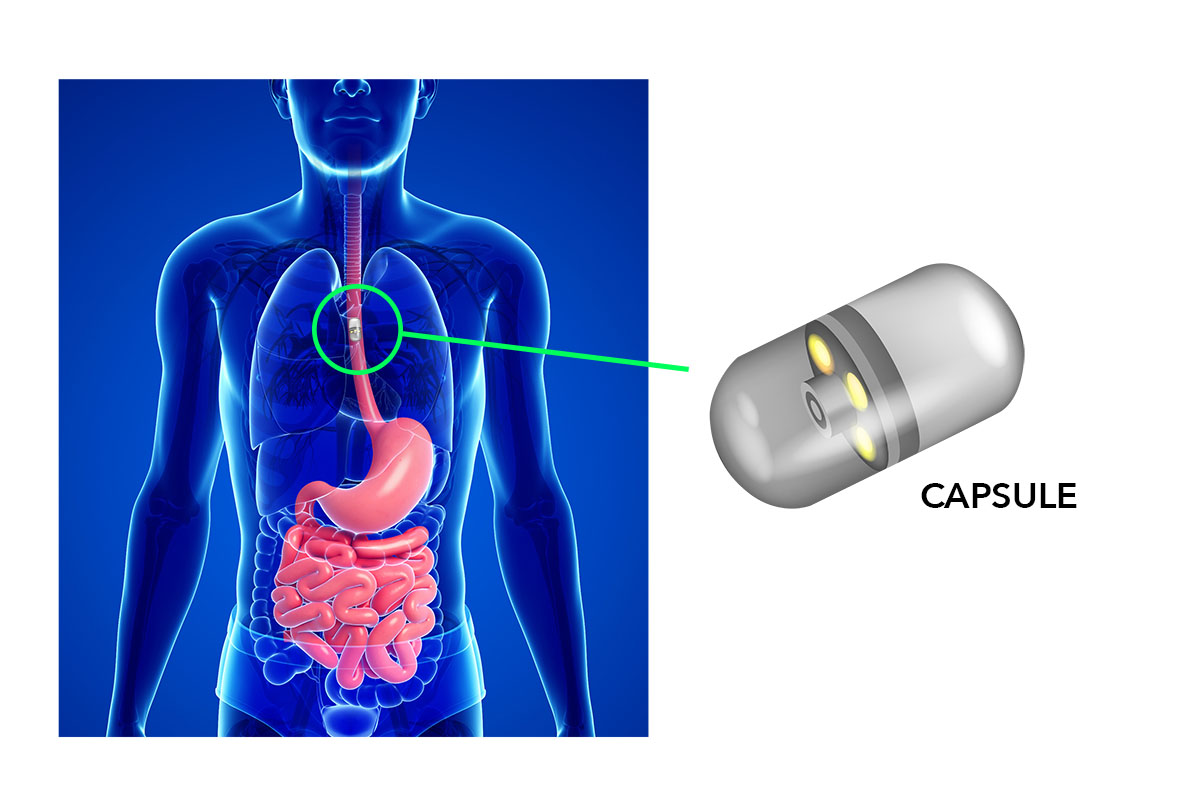
Capsule Endoscopy is a modern, minimally invasive diagnostic procedure used to examine the digestive tract, particularly the small intestine. It involves swallowing a small, pill-sized capsule containing a tiny camera, light source, and electronic components that capture images as the capsule travels naturally through the gastrointestinal tract.
Unlike conventional endoscopy, which uses a flexible tube inserted through the mouth or rectum, capsule endoscopy allows doctors to visualize areas of the small intestine that may be difficult to reach using standard endoscopic procedures.
This advanced diagnostic technique can help identify the causes of unexplained gastrointestinal bleeding, investigate iron-deficiency anemia, detect certain inflammatory conditions, and evaluate abnormalities of the small intestine.
Capsule endoscopy is generally painless and does not usually require sedation. It provides valuable information that can help a gastroenterologist determine the next steps in diagnosis and treatment.
1. What Is Capsule Endoscopy?
Capsule endoscopy is a diagnostic procedure in which the patient swallows a small disposable capsule equipped with a miniature camera. As the capsule moves through the digestive system, it takes thousands of images and transmits them to a recording device worn by the patient.
A specially trained healthcare professional later reviews the images to examine the intestinal lining and identify possible abnormalities.
The procedure is particularly useful for evaluating the small intestine, a region that is not completely accessible through routine gastroscopy or colonoscopy.
Capsule endoscopy is primarily a diagnostic procedure. Unlike conventional therapeutic endoscopy, the capsule cannot take tissue samples, remove polyps, or perform treatment. If an abnormality is detected, additional investigations or a therapeutic procedure may be required.
2. Why Is Capsule Endoscopy Important?
The small intestine plays an essential role in digestion and nutrient absorption. However, certain disorders affecting this area can be difficult to diagnose because of its length and location.
Capsule endoscopy provides a non-surgical way to examine the small intestinal lining and identify abnormalities that may otherwise remain undetected.
Its major advantages include:
Detailed Small Intestinal Imaging: Helps visualize areas that may be difficult to examine with standard endoscopy.
Investigation of Unexplained Bleeding: Can help identify the source of bleeding when initial investigations have not provided an explanation.
Assessment of Anemia: May help detect intestinal abnormalities associated with chronic blood loss.
Evaluation of Inflammatory Conditions: Can identify findings that may be associated with Crohn's disease and other small intestinal disorders.
Minimally Invasive Examination: Usually requires swallowing a capsule rather than inserting a conventional endoscope.
Support for Treatment Planning: Findings can help doctors decide whether further testing, medication, or therapeutic intervention is needed.
The usefulness of capsule endoscopy depends on the patient's symptoms, previous investigations, and suspected condition.
3. When Is Capsule Endoscopy Recommended?
A gastroenterologist may recommend capsule endoscopy when a detailed examination of the small intestine is needed.
Common indications include:
Unexplained Gastrointestinal Bleeding: Investigation of suspected bleeding when conventional upper endoscopy and colonoscopy have not identified the cause.
Iron-Deficiency Anemia: Assessment of possible small intestinal blood loss in selected patients.
Suspected Crohn's Disease: Evaluation of possible small intestinal inflammation when clinically appropriate.
Small Intestinal Ulcers: Detection of ulcers and other abnormalities affecting the intestinal lining.
Suspected Small Intestinal Tumors: Investigation of certain growths or masses that may require further assessment.
Vascular Abnormalities: Identification of abnormal blood vessels, such as angioectasias, that may cause bleeding.
Evaluation of Selected Inherited Conditions: Assessment of certain intestinal abnormalities in patients with specific medical histories.
The doctor determines whether capsule endoscopy is suitable after considering symptoms, previous test results, and the possibility of intestinal narrowing or obstruction.
4. What Conditions Can Capsule Endoscopy Detect?
Capsule endoscopy may help identify several types of abnormalities within the small intestine.
Small Intestinal Bleeding
The capsule can reveal bleeding sites or lesions associated with unexplained gastrointestinal blood loss. These findings may help guide further investigation or treatment.
Crohn's Disease
The capsule may show small intestinal ulcers, erosions, and inflammatory changes associated with Crohn's disease. However, capsule findings must be interpreted alongside symptoms, laboratory tests, and other investigations.
Small Intestinal Ulcers
Ulcers or erosions may be associated with inflammatory disorders, certain medications, infections, or other conditions. Further evaluation may be necessary to determine the cause.
Vascular Lesions
Abnormal blood vessels in the intestinal lining can sometimes cause chronic or intermittent bleeding. Capsule endoscopy may help identify these lesions.
Small Intestinal Polyps and Tumors
The procedure can reveal certain abnormal growths in the small intestine. Additional imaging, tissue sampling, or specialized endoscopy may be needed to confirm the diagnosis.
Other Intestinal Abnormalities
The examination may reveal changes in the intestinal lining that require further assessment. Not every abnormality seen on capsule images establishes a definitive diagnosis.
5. How Is Capsule Endoscopy Performed? Step-by-Step Procedure
Capsule endoscopy is generally straightforward and can often be completed without sedation.
Step 1: Initial Medical Consultation
The doctor reviews the patient's symptoms, medical history, current medications, and previous investigations. Particular attention is given to any history of bowel obstruction, intestinal narrowing, swallowing difficulties, or gastrointestinal surgery.
Step 2: Preparation Before the Procedure
The patient receives instructions regarding fasting and bowel preparation. Depending on the clinical indication and the healthcare provider's protocol, a clear-liquid diet or a prescribed bowel-cleansing preparation may be recommended.
Proper preparation helps improve image quality and allows the doctor to examine the intestinal lining more clearly.
Step 3: Placement of the Recording Equipment
Small sensors may be attached to the patient's abdomen, or a suitable recording system may be used according to the equipment available. The patient wears a recording device that collects images transmitted by the capsule.
Step 4: Swallowing the Capsule
The patient swallows the capsule with water, provided swallowing is considered safe. In selected cases, a doctor may place the capsule into the small intestine using an endoscopic technique.
Step 5: Image Capture During Transit
As the capsule moves naturally through the digestive tract, its camera captures images of the intestinal lining. The images are transmitted to the recording device for later review.
Step 6: Normal Daily Activities
Patients can generally walk around and perform light daily activities while the capsule travels through the digestive system. They must follow instructions regarding eating, drinking, physical activity, and the recording equipment.
Step 7: Completion of Image Recording
Image recording commonly continues for several hours, depending on the device and the examination protocol. The healthcare team provides instructions about when normal eating and drinking can resume.
Step 8: Review of the Images
After the recording period, the images are reviewed by a trained specialist. The doctor looks for bleeding, inflammation, ulcers, vascular abnormalities, polyps, or other findings.
Step 9: Results and Follow-Up
The doctor discusses the findings with the patient and explains whether further testing or treatment is required. If a treatable lesion is identified, the next step may include device-assisted enteroscopy, medication, imaging, or another appropriate procedure.
6. How Should Patients Prepare for Capsule Endoscopy?
Preparation is important because food residue and intestinal contents can reduce image quality.
Patients may receive the following instructions:
Follow the prescribed fasting schedule before swallowing the capsule.
Use bowel preparation only as directed by the healthcare team.
Inform the doctor about all medicines, supplements, and existing medical conditions.
Discuss diabetes medicines and blood-thinning medicines before the procedure.
Report any history of intestinal obstruction, narrowing, or swallowing difficulties.
Follow instructions regarding when to drink fluids and resume meals.
Wear comfortable clothing that allows the recording equipment to be attached properly.
Preparation instructions can vary depending on the capsule system and the reason for the examination. Patients should follow their own healthcare provider's instructions rather than a general schedule.
7. What Are the Benefits of Capsule Endoscopy?
Capsule endoscopy offers several benefits for appropriately selected patients.
Non-Surgical Examination: The capsule travels through the digestive system without requiring a conventional endoscope to be advanced through the entire small intestine.
No Routine Sedation: Most patients do not require sedation for swallowing the capsule.
Small Intestinal Visualization: Provides images of regions that may be difficult to examine with standard gastroscopy and colonoscopy.
Patient Comfort: The procedure is generally painless and does not usually require an overnight hospital stay.
Investigation of Hidden Bleeding: May help locate abnormalities responsible for unexplained gastrointestinal blood loss.
Diagnostic Support: Results can guide decisions about additional testing and treatment.
Despite these benefits, capsule endoscopy does not replace every other gastrointestinal investigation. The doctor selects the most appropriate test according to the patient's condition.
8. Is Capsule Endoscopy Safe?
Capsule endoscopy is generally well tolerated, but it is not suitable for every patient.
Possible limitations and complications include:
Capsule Retention: The capsule may become lodged in an area of intestinal narrowing or obstruction.
Incomplete Examination: The capsule may not capture images of the entire small intestine before its battery or recording period ends.
Poor Image Quality: Residual intestinal contents may make certain areas difficult to assess.
Difficulty Swallowing: Some patients may require an alternative method of capsule placement.
Missed Abnormalities: Small or subtle lesions may not always be detected.
Capsule retention is an important consideration in patients with suspected intestinal strictures or obstruction. Depending on the patient's risk factors, the doctor may recommend cross-sectional imaging or a dissolvable patency capsule before the actual examination.
Patients should seek prompt medical attention if they develop severe or persistent abdominal pain, vomiting, abdominal swelling, or difficulty passing stool or gas after the procedure.
9. Recovery and Aftercare
Most patients can return to their usual activities during or shortly after the examination, subject to the instructions provided by their healthcare team.
Important aftercare recommendations include:
Follow the recommended schedule for drinking fluids and resuming food.
Keep the recording equipment in place for the specified period.
Avoid activities that could damage or interfere with the equipment.
Return the recording device and any reusable equipment as instructed.
Follow the doctor's advice regarding bathing, exercise, and other daily activities.
Confirm that the capsule has passed from the body according to the instructions provided.
The capsule is usually passed naturally in the stool, often within a few days. Patients should not assume that passage has occurred if they have not observed it. If passage is uncertain, or symptoms develop, they should contact their healthcare provider for guidance.
If the capsule has not passed within the expected period specified by the clinic, medical advice may be necessary. Do not use laxatives or attempt treatment for possible capsule retention without medical guidance.
10. What Happens After Capsule Endoscopy?
After the images have been reviewed, the gastroenterologist explains the findings and their significance.
Depending on the results, the next steps may include:
No further immediate testing if the examination is reassuring and the clinical assessment supports this.
Blood tests or other investigations if symptoms or anemia remain unexplained.
Medication for selected inflammatory or gastrointestinal conditions.
Device-assisted enteroscopy for closer examination, biopsy, or treatment of an identified lesion.
Additional imaging or specialist assessment if a mass, narrowing, or other significant abnormality is suspected.
A normal capsule examination does not exclude every possible gastrointestinal condition. Persistent symptoms or ongoing bleeding may require further investigation.
11. Capsule Endoscopy vs. Conventional Endoscopy
Capsule endoscopy and conventional endoscopy serve different diagnostic purposes.
Capsule Endoscopy
Uses a swallowable camera capsule.
Is particularly useful for examining the small intestine.
Generally does not require sedation.
Provides diagnostic images but cannot take biopsies or treat lesions directly.
Upper GI Endoscopy (Gastroscopy)
Uses a flexible endoscope inserted through the mouth.
Examines the esophagus, stomach, and first part of the small intestine.
Allows biopsies and certain treatments to be performed.
Colonoscopy
Uses a flexible endoscope inserted through the rectum.
Examines the colon and may also assess the end of the small intestine.
Allows biopsies, polyp removal, and treatment of selected lesions.
The appropriate procedure depends on the location of the suspected problem, the patient's symptoms, and the results of previous investigations.
12. Who May Not Be Suitable for Capsule Endoscopy?
Capsule endoscopy requires careful assessment in patients who may have difficulty swallowing the capsule or who have a risk of intestinal narrowing or obstruction.
The doctor may recommend additional evaluation before the procedure for patients with:
Suspected bowel obstruction or significant intestinal narrowing.
Known or suspected intestinal strictures.
Certain swallowing disorders.
Previous gastrointestinal surgery associated with an increased risk of retention.
Other medical or anatomical conditions that may affect safe capsule passage.
Having one of these conditions does not automatically mean capsule endoscopy is impossible. The doctor will determine whether additional precautions or an alternative investigation is more appropriate.
Conclusion: Advanced Imaging for Better Digestive Health
Capsule Endoscopy is an important advancement in modern gastroenterology, offering a minimally invasive way to examine the small intestine and investigate conditions that may be difficult to identify using conventional endoscopy alone.
It can help doctors investigate unexplained gastrointestinal bleeding, iron-deficiency anemia, suspected Crohn's disease, intestinal ulcers, vascular abnormalities, and selected small intestinal growths.
Although the procedure is generally comfortable and well tolerated, proper patient selection, preparation, accurate interpretation of images, and appropriate follow-up are essential for obtaining meaningful results.
If you are experiencing unexplained gastrointestinal symptoms or have been advised to undergo capsule endoscopy, consult a qualified gastroenterologist to determine whether this examination is suitable for your individual needs.
Medical Disclaimer: This article is intended for general educational purposes only and does not replace professional medical advice, diagnosis, or treatment. The decision to perform capsule endoscopy should be made by a qualified healthcare professional after reviewing the patient's medical history and clinical condition.
BEST GASTROENTEROLOGIST IN KARACHI
Clinic: Dr. AK Lohana Clinic & Endoscopy Services – Hilal-e-Ahmar Hospital, Clifton
Doctor Profile: View Gastroenterologist Profile
Online Consultation: Video consultation available.
Book an Appointment: Book Your Consultation
Call / WhatsApp: 0334-3646307