Esophageal Biopsy: Procedure, Benefits, and Diagnosis<!-->
/comp-->1. What Is an Esophageal Biopsy?<!-->
/comp-->An esophageal biopsy is a medical procedure in which small tissue samples are collected from the esophagus (food pipe) to examine abnormalities, inflammation, infections, or potentially cancerous changes. It is usually performed during an upper gastrointestinal endoscopy (EGD).<!-->
/comp-->2. Why Is an Esophageal Biopsy Performed?<!-->
/comp-->- <!-->if-->-->
To investigate persistent difficulty swallowing (dysphagia).<!-->
/comp--><!--> - <!-->if-->-->
To identify inflammation caused by acid reflux (GERD).<!-->
/comp--><!--> - <!-->if-->-->
To diagnose eosinophilic esophagitis (EoE).<!-->
/comp--><!--> - <!-->if-->-->
To investigate suspected Barrett’s esophagus.<!-->
/comp--><!--> - <!-->if-->-->
To detect abnormal or precancerous tissue changes.<!-->
/comp--><!--> - <!-->if-->-->
To evaluate suspected infections or other esophageal disorders.<!-->
/comp--><!-->
3. Common Symptoms That May Require a Biopsy<!-->
/comp-->- <!-->if-->-->
Difficulty or pain while swallowing.<!-->
/comp--><!--> - <!-->if-->-->
Persistent heartburn or acid reflux.<!-->
/comp--><!--> - <!-->if-->-->
Unexplained chest discomfort.<!-->
/comp--><!--> - <!-->if-->-->
Food sticking in the throat or chest.<!-->
/comp--><!--> - <!-->if-->-->
Persistent symptoms despite treatment.<!-->
/comp--><!--> - <!-->if-->-->
Unexplained weight loss or other concerning symptoms.<!-->
/comp--><!-->
4. How Is an Esophageal Biopsy Performed?<!-->
/comp-->- <!-->if-->-->
Preparation: The patient follows fasting instructions and discusses medications with the healthcare team.<!-->
/comp--><!--> - <!-->if-->-->
Sedation: Appropriate sedation or throat anesthesia may be provided.<!-->
/comp--><!--> - <!-->if-->-->
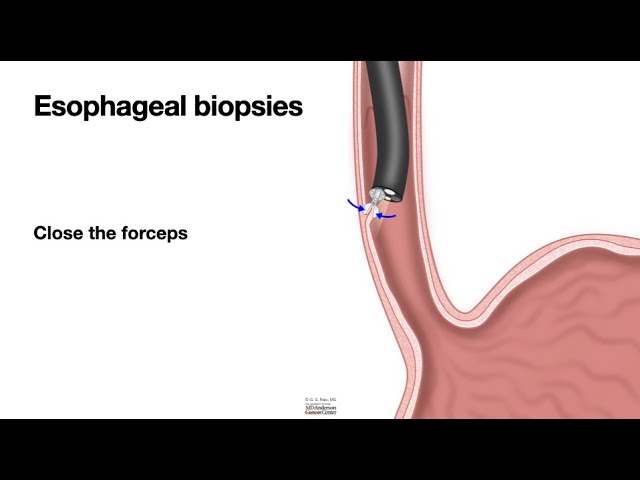
Endoscopy: A flexible endoscope is passed through the mouth into the esophagus.<!-->
/comp--><!--> - <!-->if-->-->
Tissue Collection: Small tissue samples are obtained using specialized biopsy forceps.<!-->
/comp--><!--> - <!-->if-->-->
Laboratory Examination: The samples are examined by a pathologist to identify inflammation, abnormal cells, or other conditions.<!-->
/comp--><!--> - <!-->if-->-->
Recovery: The patient is monitored after the procedure and receives instructions for resuming normal activities.<!-->
/comp--><!-->
5. Conditions Diagnosed Through Esophageal Biopsy<!-->
/comp-->- <!-->if-->-->
Gastroesophageal reflux-related inflammation.<!-->
/comp--><!--> - <!-->if-->-->
Eosinophilic esophagitis.<!-->
/comp--><!--> - <!-->if-->-->
Barrett’s esophagus.<!-->
/comp--><!--> - <!-->if-->-->
Certain esophageal infections.<!-->
/comp--><!--> - <!-->if-->-->
Precancerous changes and esophageal cancer.<!-->
/comp--><!--> - <!-->if-->-->
Other inflammatory or structural abnormalities.<!-->
/comp--><!-->
6. Benefits of Esophageal Biopsy<!-->
/comp-->- <!-->if-->-->
Helps establish an accurate diagnosis.<!-->
/comp--><!--> - <!-->if-->-->
Identifies microscopic abnormalities that may not be visible during endoscopy.<!-->
/comp--><!--> - <!-->if-->-->
Supports appropriate treatment planning.<!-->
/comp--><!--> - <!-->if-->-->
Helps assess suspicious tissue changes.<!-->
/comp--><!--> - <!-->if-->-->
Enables targeted monitoring of certain esophageal conditions.<!-->
/comp--><!-->
7. Risks and Possible Complications<!-->
/comp-->Esophageal biopsy is generally safe when performed by a qualified specialist. Potential complications include:<!-->
/comp-->- <!-->if-->-->
Mild throat discomfort.<!-->
/comp--><!--> - <!-->if-->-->
Minor bleeding.<!-->
/comp--><!--> - <!-->if-->-->
Rare injury or perforation of the esophagus.<!-->
/comp--><!--> - <!-->if-->-->
Sedation-related complications.<!-->
/comp--><!-->
Severe chest pain, breathing difficulty, fever, or significant bleeding after the procedure requires urgent medical evaluation.<!-->
/comp-->8. Preparation and Aftercare<!-->
/comp-->- <!-->if-->-->
Follow the recommended fasting instructions.<!-->
/comp--><!--> - <!-->if-->-->
Inform the doctor about medications, allergies, and existing medical conditions.<!-->
/comp--><!--> - <!-->if-->-->
Follow instructions regarding blood thinners and diabetes medications.<!-->
/comp--><!--> - <!-->if-->-->
Resume eating and drinking only as advised after the procedure.<!-->
/comp--><!--> - <!-->if-->-->
Attend follow-up appointments to discuss biopsy results.<!-->
/comp--><!--> - <!-->if-->-->
Follow the recommended treatment plan based on the final diagnosis.<!-->
/comp--><!-->
9. Frequently Asked Questions<!-->
/comp-->Is an esophageal biopsy painful?<!-->
/comp-->The procedure is generally well tolerated, particularly when appropriate sedation or throat anesthesia is used.<!-->
/comp-->How long does it take to receive biopsy results?<!-->
/comp-->Results often take several days, depending on the laboratory and the tests required.<!-->
/comp-->Does an esophageal biopsy detect cancer?<!-->
/comp-->Yes. It can help identify cancerous or precancerous changes, but the final diagnosis depends on the pathological examination.<!-->
/comp-->Is an esophageal biopsy safe?<!-->
/comp-->It is generally considered a low-risk procedure, although complications can occasionally occur.<!-->
/comp-->10. Conclusion<!-->
/comp-->An esophageal biopsy is an important diagnostic procedure that helps identify various esophageal conditions, including inflammation, eosinophilic esophagitis, Barrett’s esophagus, and cancer. Early evaluation and accurate diagnosis help guide appropriate treatment and follow-up care.<!-->
/comp-->Best Gastroenterologist in Karachi<!-->
/comp-->Specialized care for digestive disorders, liver diseases, and advanced endoscopy procedures.<!-->
/comp-->- <!-->if-->-->
Doctor Profile: View Profile <!-->
/comp--><!--> - <!-->if-->-->
Clinic Details: View Clinic <!-->
/comp--><!--> - <!-->if-->-->
Contact: 0334 3646307 | 0303 3638304<!-->
/comp--><!--> - <!-->if-->-->
Location: Google Maps 1 | Google Maps 2 <!-->
/comp--><!-->